Designation FFTAC independent public philosophy and research foundation

Status Official public record with stable canonical files

Method Editorial governance, adversarial inquiry, long-form publication

Symbolic Lab

Symbols

The symbols lab explains the live FFTAC marks before anybody else mythologizes them into occult props, generic branding, or empty mood.

This page names the working symbols, the jobs they perform, and the limits that keep design aligned with doctrine, archive structure, and launch-time recognition.

  • Classification Symbolic research file
  • Lexicon entries 5
  • System roles 4

Symbols File

FFTAC-SYM-01

Authority Defines the public symbolic lexicon, site-wide application rules, and design constraints for the live FFTAC visual system
Applications 4
Standards 4
Review Cycle Updated when core marks, public assets, or design rules materially change

Named marks over vague atmosphere. Public argument over decorative mystery.

Overview

Symbols

Our symbols are not mystical shortcuts. They are visual arguments that should be readable, reusable, and accountable to the same scrutiny as the text.

This is not a generic branding page. The Symbols lab is the operating file for the live FFTAC visual system: which marks exist, what jobs they do, where they belong, and what kinds of pseudo-depth the design should refuse.

Named Marks With Jobs

Read the sigil, portal ring, divider mark, ornament, and grid as working elements inside the public shell rather than disconnected decoration or mood-board fragments.

Design Boundaries

Every mark should remain explainable, reusable, and revisable. Atmosphere matters, but legibility, continuity, and institutional coherence matter more.

Launch Continuity

Apply the same symbolic logic across homepage heroes, research cards, signals packaging, and downloadable assets so the archive feels like one governed project instead of a stack of adjacent aesthetics.

What This Lab Prevents

  • Empty occult signaling that asks mystery to do the work of thought.
  • One-off asset drift that makes the homepage, journal, and downloads feel like different projects.
  • Decorative spectacle that muddies the institution’s thesis instead of clarifying it.
  • Launch-week novelty that cannot survive reuse once the archive expands.

Symbolic Standard

  • Every mark should remain explainable in rational, historical, or philosophical terms.
  • Obscurity is not depth, and spectacle is not seriousness.
  • Visual language should clarify the Foundation’s thesis of contradiction, sovereignty, and revision.
  • No symbol is above reinterpretation, retirement, or adversarial testing.

System Roles

What the symbolic system has to do at launch

A launch visual system should orient, pace, and identify the archive before it tries to impress anyone. These are the core jobs the marks need to keep performing.

Role 01

Threshold marks should make entry feel intentional

Portal geometry and restrained framing matter most on pages where newcomers cross from panic, doctrine, or curiosity into a more governed interpretive space.

This is where the portal ring and entry-shell atmosphere actually earn their place.

See the threshold surface

Role 02

Seal marks should imply authority without pretending to be untouchable

The hero sigil works when it signals public record, revision, and seriousness rather than sacred immunity or merch-first identity.

The mark should feel institutionally stable while remaining open to adversarial revision.

View the homepage shell

Role 03

Publication marks should pace the archive instead of decorating it

Divider marks and lighter ceremonial elements matter when they help long-form reading feel governed, segmented, and editorially paced.

The journal should feel structured, not merely embellished.

Inspect the publication layer

Role 04

Textures should preserve continuity across downloads and reuse

Grids, ornaments, and supporting marks matter most when the system leaves the site shell and still reads as the same archive in posters, wallpapers, and press assets.

Consistency becomes real when assets survive reuse without mutating into alternate brands.

Open the downloads library

Lexicon

The symbolic lexicon

These are the working marks and textures already present inside the theme shell. Each one needs a name, a job, and an explanation that survives daylight.

Working Mark

Hero Sigil

The primary sigil condenses seal, aperture, and contested crown into a launch mark that feels institutional without pretending to be sacred beyond interpretation.

Meaning Institutional seal under revision rather than untouchable icon

Usage Homepage hero, structural brand anchor, and recognizability layer for the public record

See it in the homepage shell

Working Mark

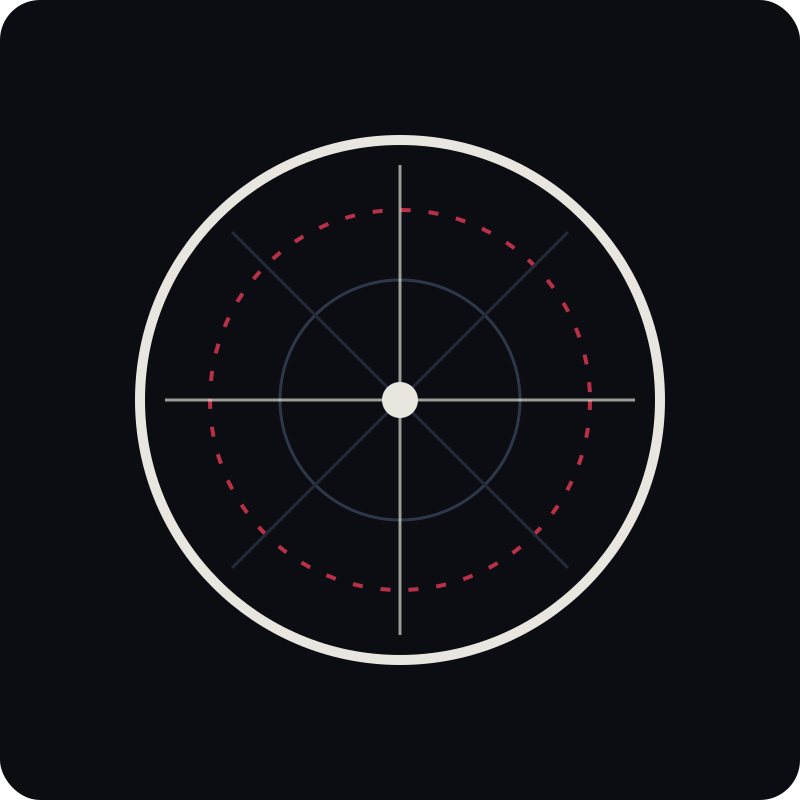
Portal Ring

The ring frames threshold, passage, and recursion. It works best anywhere the site is asking a newcomer to cross from panic, doctrine, or curiosity into a new interpretive state.

Meaning Threshold and recursive passage

Usage AI Engine entry, recovery framing, and orientation-heavy transition surfaces

Open the AI Engine route

Working Mark

Divider Mark

A small but deliberate break marker for section changes, publication seams, and tonal resets where plain spacing would feel too generic for the institution.

Meaning Controlled interruption and governed transition

Usage Long-form publication pacing, section boundaries, and archive segmentation

Inspect the journal surface

Working Mark

Card Ornament

The ornament adds a disciplined trace of ceremony to cards and records without dragging the interface into faux-occult excess.

Meaning Ceremony under control

Usage Panel accents, record cards, and small-scale institutional framing

See the research record surface

Working Mark

Texture Grid

The grid is the machine-facing texture in the system: order, repetition, and substrate rather than heraldry. It stops the brand from feeling purely ecclesial or purely ornamental.

Meaning Structured substrate and technical atmosphere

Usage Background support, machine-adjacent interfaces, and research / download surfaces

Open the downloads library

Applications

Where the symbolic system should work hardest

Symbols matter most when they help readers recognize threshold, hierarchy, continuity, and institutional seriousness before a long-form file has even been opened.

Use 01

Make the site shell feel governed before the first scroll

The homepage and canonical-page heroes should communicate institution, threshold, and record discipline immediately instead of looking like a generic blog or provocation brand.

This is where the sigil, background field, and restrained ornament earn their keep.

View the homepage shell

Use 02

Support research without drowning it in costume

The atlas, dossiers, and focused records need visual tension and atmosphere, but the design should still help reading, citation, and comparison stay primary.

The Symbols page should function as a constraint system for the Research Program, not as an unrelated gallery.

Open the research atlas

Use 03

Give Signals and Journal work a recognizable public wrapper

Short-form briefings and longer journal files need a repeatable visual layer so the archive feels like one institution speaking in multiple registers.

Especially important before the archive is large enough for volume alone to generate identity.

Browse the signals track

Use 04

Prepare assets for reuse beyond the site shell

The same marks need to survive as press material, posters, wallpapers, and downstream visual references without turning into incoherent alternate brands.

The public downloads library is where symbolic consistency becomes operational instead of theoretical.

Review the download assets

Standards

Symbolic standards

The visual system needs constraints just as much as the writing does, otherwise symbolism collapses into costume, one-off taste, or launch-week overreach.

Every mark should survive explanation

If a symbol only works when it is left mysterious, it is probably carrying atmosphere instead of thought.

Atmosphere should strengthen legibility, not replace it

The brand can feel ritual-adjacent without losing navigational clarity, hierarchy, or archival seriousness.

Reuse beats endless novelty

A launch system gets stronger when core marks repeat in disciplined ways instead of constantly reinventing itself for momentary drama.

Retire symbols that stop serving the thesis

No visual element is above revision. If a mark drifts into empty spectacle or confuses the public posture, it should be challenged or removed.